

Afraid of Falling? Physical Therapy Is Here To Catch You
Marion, 74, was terrified of falling. (Note that her name has been changed.) She’d heard the statistics: Falls are a leading cause of injury among people over 60 and the second leading cause of injury deaths worldwide. And although she’d always been active, she found her balance changing as she grew older, which only deepened her fears.
Like many people, Marion didn’t realize that the fear of falling can also be debilitating. That fear kept her close to home. She didn’t spend as much time with friends and family, and her lifestyle was much less active than it had been ten years earlier–which actually increased her fall risk!
But then Marion began seeing a physical therapist to help with her hip pain. When she shared her concerns about falling, he incorporated fall prevention strategies into her treatment plan, building Marion’s confidence enough that she returned to some of her favorite activities, like gardening and meeting with friends for a weekly coffee.
At Goldman Physical Therapy, we know falls can be frightening. But we also know that fall prevention training can help you face your fears and give you the confidence to live an active, healthy lifestyle, even into old age.
Ready to get started with your own fall prevention plan? Schedule an appointment with us today!
Understanding Your Fall Risk
Everyone’s fall risk is different. No single factor determines your likelihood of a fall; instead, it’s a complex blend of age, lifestyle choices, and health conditions. The more of these factors apply to you, the more likely you are to fall.
Which items on this fall risk list apply to you or a loved one?
- Advanced age (60 years or older)
- Being female (women are more likely to suffer falls than men)
- Joint pain, including from arthritis
- Spells of dizziness or vertigo (a spinning sensation)
- Decline in vision or hearing
- Sedentary lifestyle
- Impaired balance or gait
- Weakness in the lower body
- Use of medications that can cause dizziness or balance issues
- Neurological disorders such as Parkinson’s disease or Alzheimer’s
- Stroke survivor
- A history of falls
If you think you might be at a high risk of falling, don’t get scared–give us a call! Our team of physical therapists can assess your fall risk and provide you with a customized fall prevention plan that can lower the likelihood of a fall-related injury.
How Physical Therapy Can Keep You On Your Feet
A good fall prevention plan will address your specific fall risks. For example, someone who suffers from regular vertigo attacks would benefit from specialized therapy to address that issue. Meanwhile, someone with Parkinson’s disease doesn’t necessarily need to worry about dizziness but does need to address an impaired posture, balance, and gait.
Our therapists will work with you to decide which specific treatment options will be the right choice for your personal fall prevention plan. That said, there are some commonalities. Here are a few of the techniques we typically include:
- Pain Management: Joint pain can inhibit mobility, resulting in a sedentary lifestyle and increased fall risk. If you suffer from pain, we’ll work with you to manage it safely and effectively.
- Balance Training: Balance training is the foundation of fall prevention. We’ll guide you through specialized exercises that challenge your balance in a safe, monitored environment–ensuring you see improvements over time.
- Strength Training: One of the reasons older people have an increased fall risk is that you lose muscle mass as you age, making it more challenging to move around. We’ll prepare a strength training program appropriate to your ability level and help you restore some of that lost muscle mass.
- Gait Training: This technique focuses on improving your walking patterns. Certain conditions (such as Parkinson’s disease or stroke) can severely change your gait, and addressing those impairments can reduce your chances of falling.
- Regular Exercise Program: Staying active plays a significant role in keeping you from a fall. We’ll suggest an exercise program that suits your needs and abilities, such as a simple walking regimen.
Say Goodbye to Pain – Get Started with PT Now!
Rediscover pain-free living at Goldman Physical Therapy—schedule your appointment today and take the first step toward feeling your best again!
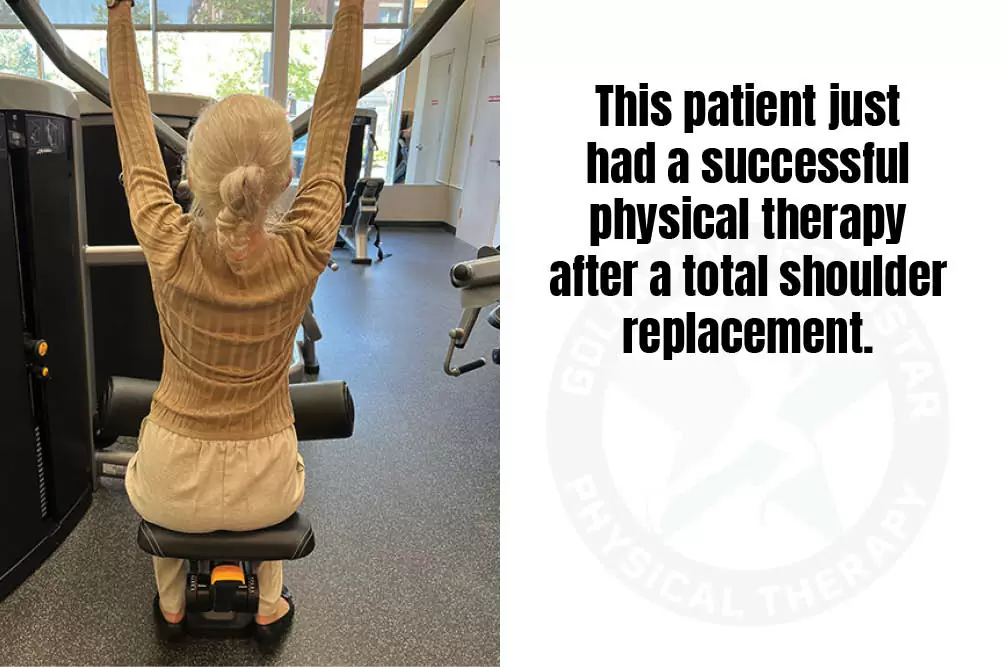
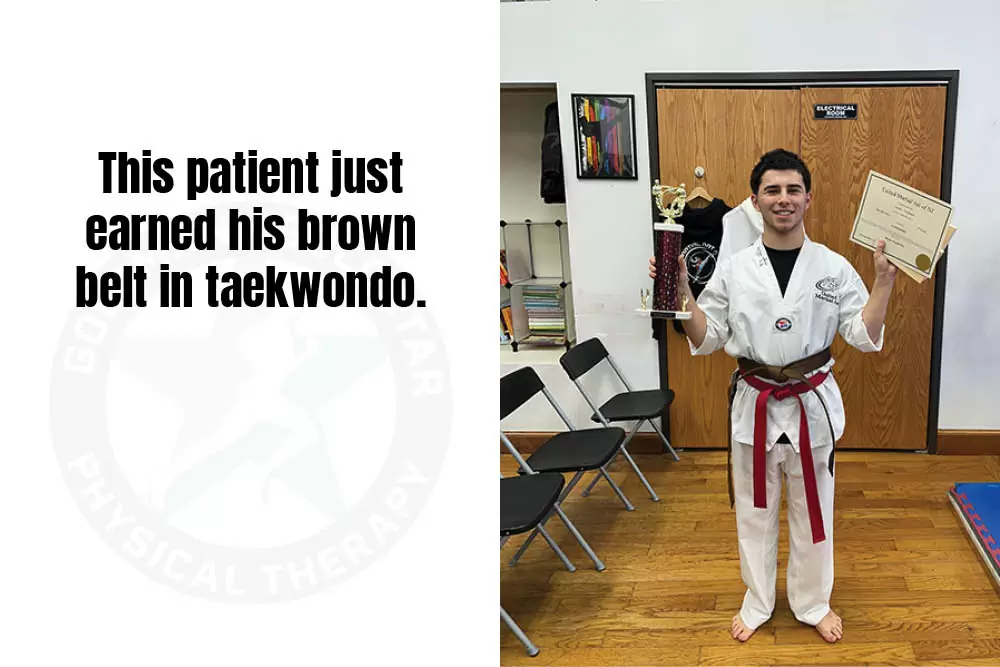
Patient Success:

Chair Yoga: A Fun, Gentle Approach to Balance and Fitness
You heard that Yoga is a great way to improve your balance–but when you went online to find resources, you discovered pages and pages of bendy athletes twisted into impossible positions. How could you possibly dream of getting started?
If this scenario rings true to you, don’t fear: Yoga is far more forgiving than social media would have you believe! In fact, there’s even a form of Yoga especially designed for people who struggle with balance and mobility: chair Yoga.
Chair Yoga moves through standard Yoga postures like cat/cow or warrior pose–but modified so that you can use a chair to retain your balance. It’s a great choice for older adults or anyone who wants to improve their balance in a safe, relaxing way.
Simple Chair Yoga Postures To Get You Started
- Cat/Cow: Start sitting in a sturdy chair with your feet firmly planted on the floor, hip-width apart. With your hands on your knees, breathe deeply in and arch your back, looking up to the ceiling. As you exhale, round your spine and drop your chin to your chest. Let the movements flow into each and repeat 5 times each.
- Chair Side Stretch: Again, sit in your chair with your feet hip-width apart. Inhale deeply as you lift your right hand overhead, then bend gently to your left. Feeling off-balance? Steady yourself by stretching your left arm across your lap to grip your right thigh or the right side of the chair. Repeat on the other side.
- Chair Pigeon: Sit upright in your chair, feet firmly planted. Gently cross your left ankle over your right thigh, flexing your left foot to protect your knee. You should feel a stretch in your left glute. If this is enough, stay here! If you’d like a deeper stretch, keep your spine straight and slowly hinge forward, leaning your chest forward over your legs. Hold for three seconds, then repeat on the other side.
Discover More Chair Yoga with Goldman Physical Therapy!
Want to explore more chair Yoga postures? Call us to schedule an appointment. We’ll ensure you’re performing the movements correctly and help you develop a regular chair Yoga practice!
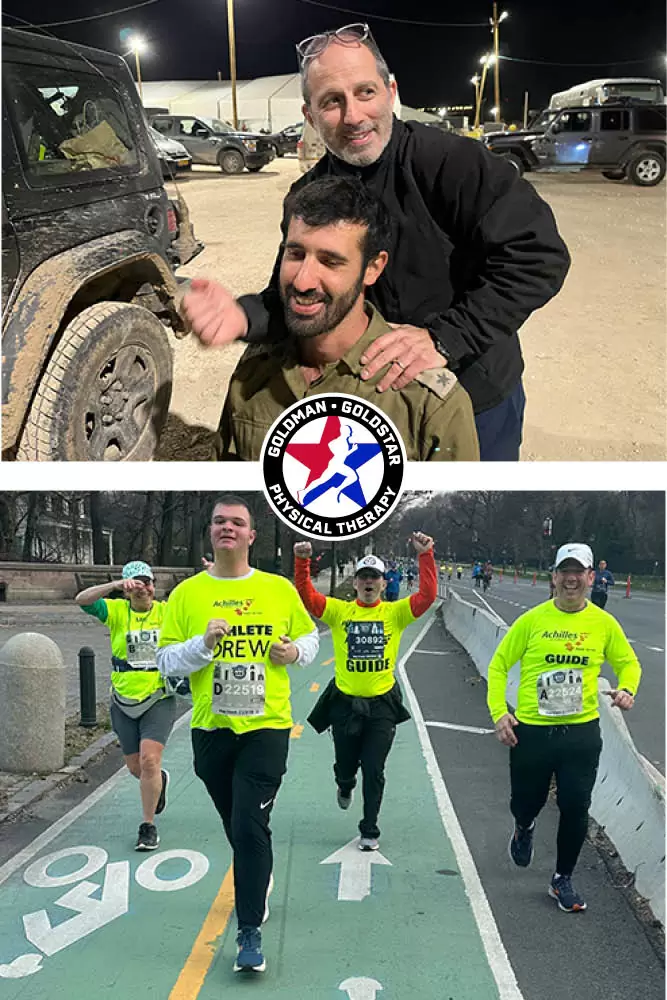
David Goldman in the Community
- David working on an IDF soldier
- David running the New York City half marathon with the Achilles track club, helping disabled athletes compete in traditional sporting events
Our Patients Get Great Results
“Both David and Tracy are the best of the best. Can’t thank them enough for their profesional work, patience and support. I highly recommend them.”
– Hania J.
Staff Spotlight
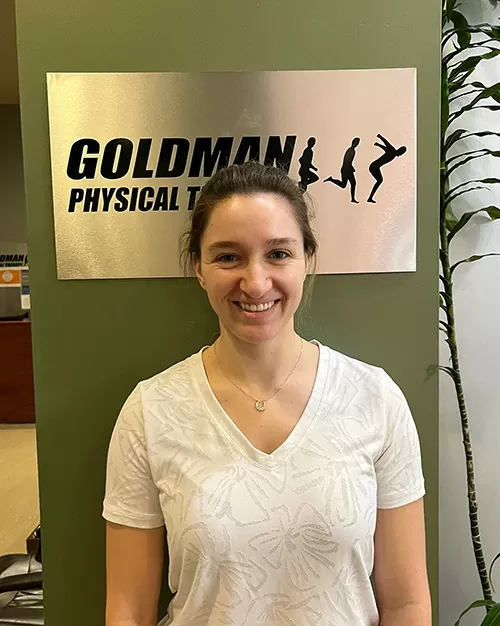
Dr. Haylee Alonso, DPT, Doctor of Physical Therapy
Dr. Haylee Alonso graduated in 2020 from Rutgers University with her Doctorate of Physical Therapy. She is a highly skilled practitioner that primarily treats outpatient orthopedics and sports medicine physical therapy. She is currently working towards becoming a Orthopedic Certified Specialist (OCS) and furthering her education through various cutting edge continuing education classes, including Blood Flow Restriction(BFR), Dry Needling, Olympic Weight Lifting, and Spinal Manipulation. Dr. Alonso’s approach to treating is modern and incorporates the specific motions you need to get back to what you love doing.
Dr. Alonso is a lifelong horse back rider and instructor, which inspired her love for physical therapy. As she went through years of instructing young riders in their technique and positions she realized she wanted a career of teaching and helping others perform their best. She has a new found love for golf and paddle boarding, which allows her to focus on her own balance and position techniques out of the office. On the weekends you can find her anywhere outdoors, whether it be on the golf course, hiking a trail, playing with her dog, or out on the lake.
Effective communication between the provider and the patient is something Dr. Alonso values greatly in order to achieve the best outcomes that are tailored to each individual based on their daily needs. It is her priority to be an educator and an avid listener to clients through their rehab journey. Education and collaboration are the building blocks to redesign your most ambitious health related goals.
No More Fear of Falling: Call Us Today!
A dedicated fall prevention plan from Goldman Physical Therapy can give you the confidence to age healthfully, no matter your fall risk. Call us today to schedule an appointment for your initial consultation!
Thank you for subscribing to Goldman Physical Therapy

Healthy Recipe:
Crab Tacos
Ingredients
- Tortillas
For the filling
- 50ml mayonnaise
- 200g brown crabmeat
- Juice ½ lime
- 1 small fennel bulb, very finely sliced
- ½ cucumber, halved lengthways, deseeded and sliced
- Small bunch fresh chives, finely chopped
- Small bunch fresh coriander, roughly chopped
- 2 spring onions, finely sliced
- 300g white crabmeat
For the tomato salsa
- 200g cherry tomatoes, quartered
- ½ red onion, very finely diced
- Juice 1 lime
- Handful fresh mint, finely chopped
- Coriander and mint leaves to garnish and lime wedges to serve
Directions
- Mix all the filling ingredients except the white crabmeat, then taste and season.
- Mix all the ingredients for the salsa in a bowl and season well.
- To assemble, fill a tortilla with some of the filling mixture, then top with some white crabmeat and a dollop of salsa.
- Garnish with a few herb leaves, then roll up the tortilla.
Meet Our Team
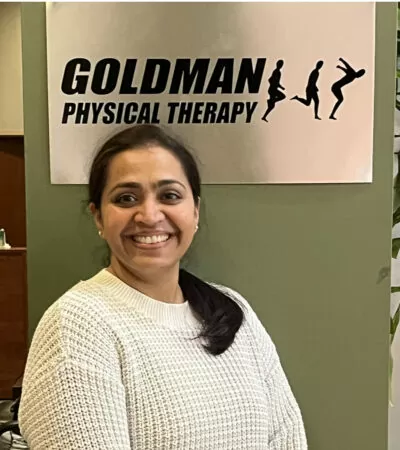
Dr. Aditi Patel, DPT
Doctor of Physical Therapy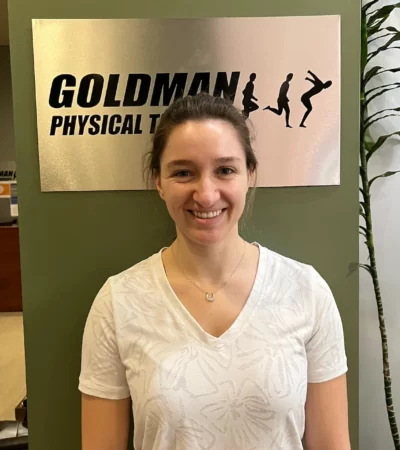
Dr. Haylee Alonso, DPT
Doctor of Physical Therapy