

How Physical Therapy Tackles Hip Pain
You want to take care of some chores or go for a walk — but hip pain is keeping you on the couch. If this sounds familiar, know that you don’t have to suffer! At Goldman Physical Therapy, our physical therapists will guide you through a simple process to address your hip pain so you can get active again.
This newsletter will take you through that process, from understanding your symptoms to the outcomes you can expect from physical therapy. Still have questions? Call us to schedule an appointment!

Pinpoint Your Symptoms
There are several potential reasons why someone might develop hip pain. To treat your pain effectively, we need to pinpoint what that cause could be.
When you visit us for your initial appointment, one of the first things we’ll do is ask you to share your symptoms. “Hip pain” often causes a lot more than just pain, and being able to describe your pain, mobility limitations, and other concerns helps us get a clearer picture of your condition.
For example, you know that your hip hurts. But when do you experience pain (i.e., during activity)? Does your pain come and go? Where do you experience pain? Is it just in your hip, or do you feel it elsewhere? Is the pain a dull ache? Sharp and shooting?
Make sure to share additional symptoms you might be experiencing, too. Here are some common ones:
- Stiffness/limited range of motion in your hip
- Weakness throughout the lower extremities
- Mobility issues, including walking, going up or down stairs, or struggling to stand up
- Difficulty performing everyday tasks, such as putting on your shoes — and let us know which ones
Identify a Cause and Develop a Treatment Plan
Thanks to your detailed symptom description — as well as a health history and comprehensive physical exam — your therapist should be able to determine the underlying cause of your hip pain.
If you’re 55 or older, there’s a good chance your hip pain stems from osteoarthritis. This degenerative condition causes cartilage and bone tissue to break down, leading to pain and restricted mobility.
However, hip pain can also stem from an injury. If you’re an athlete or particularly active person, you may have suffered an acute injury, such as a labral tear, in which a ring of cartilage in the hip socket becomes damaged. You may have also sprained your hip — that is, damaged the ligaments that hold the joint together.
However, even if you haven’t had an obvious injury, an injury could still be to blame. Overuse injuries are injuries that develop gradually and, in the hip, generally affect the soft tissue — your muscles, tendons, and ligaments. They usually occur due to repetitive movements or improper biomechanics.
Your treatment plan will vary based on the underlying cause of your pain, but in most cases, we aim to…
- Help manage acute pain with manual therapy, modalities, or gentle stretches.
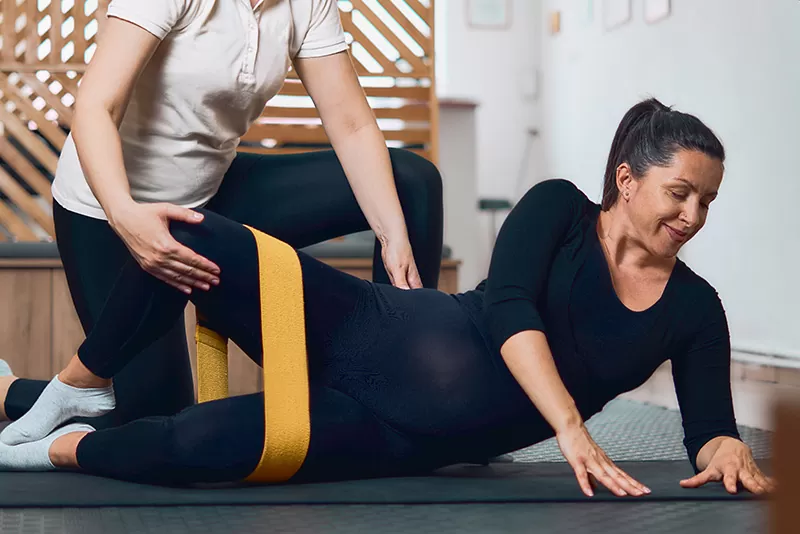
- Improve mobility and range of motion through targeted stretches and exercises.
- Build strength in the muscles surrounding the hip to support the joint.
- Restore your ability to perform everyday movements, such as going upstairs — and for the athletes, we’ll help restore your ability to perform sport-specific movements.
Understand Your Outcomes
As with treatments, your exact outcomes will vary based on the underlying cause. However, other factors can come into play, too, such as age, health status, and the amount of time you can spend with physical therapy (whether in the clinic or performing home exercise programs).
For example, osteoarthritis has no cure, but you can manage your symptoms with regular physical activity. If you stick with your prescribed exercise program, you can minimize pain, slow the progression of your condition, and delay or even avoid surgery.
If you suffered an injury, you likely will be able to resolve your hip pain, usually within 1-3 months. However, if your injury was severe, full rehabilitation — the point at which you’ve fully restored strength and function — may take longer. Continuing any prescribed exercises is important even if you no longer feel pain.
Start Your Own Journey to Hip Pain Relief Today
No matter the reason for your hip pain, the physical therapists at Goldman Physical Therapy will guide you toward lasting relief. Call us today to schedule an appointment to get started!
Say Goodbye to Pain – Get Started with PT Now!
Rediscover pain-free living at Goldman Physical Therapy—schedule your appointment today and take the first step toward feeling your best again!
Our Patients Get Great Results
“I just finished about 8 weeks of PT with Jenny at Goldman PT. I have a pinched nerve in my neck, with pain going down my shoulder to my arm. I never thought I’d get better, but Jenny helped me so much. So kind and sweet. A very good listener, and I’m going to miss her. Also, Chris helped me in therapy also and he’s GREAT too!”
-Jane B.
Follow Us on Facebook!
Click the button below to follow Goldman Physical Therapy on Facebook to keep up to date with what we are doing around the clinic and community!



Savor a Pain-Free Football Season
As Friday night lights illuminate the field and the spirit of football echoes throughout the community, ensure that back pain doesn’t get in the way while rooting for your team in the stands. Experience the thrill of the season without the discomfort of back pain. Our treatments are designed for your unique needs, ensuring you’re game-day-ready every time.
Your game plan to tackle back pain involves the following:
- Effective treatments to alleviate pain and guard against future flare-ups.
- Customized strategies to boost your mobility and strength so you can cheer on your favorite teams without hesitation.
- Tips to enjoy those tailgate barbecues and halftime huddles without a second thought to your back.
Get ready to chant, cheer, and celebrate without restraint. Connect with Goldman Physical Therapy today, and let’s ensure you’re in prime shape for every touchdown this season!
September Word Scramble
tnuamu
plaep
uxqoien
olatbflo
ratesvh
caron
Answer Key
autumn
apple
equinox
football
harvest
acorn
Thank You for Subscribing to Goldman Physical Therapy

Cool, fresh, and bursting with flavor, this Summer Minted Couscous Salad is the perfect light dish for warm days. With bright herbs, crisp veggies, and a zesty finish, it’s a refreshing addition to any summer meal or picnic.
Enjoy This Seasonal Recipe!
Minted Couscous Salad
- 1 cup dry couscous
- 1 cup jarred roasted red peppers
- 2 tbsp olive oil
- Juice from 1/2 lemon
- 1 tomato, seeded and diced
- 1 English cucumber, diced
- 1/2 cup mint (or flat-leaf parsley)
- Salt and pepper
Cook the couscous according to package directions. Fluff with a fork. Meanwhile, dice roasted red peppers and add diced tomato and cucumber to a bowl. Add lemon juice and olive oil and stir to combine. Finely chop mint (or parsley) and add to bowl, along with the cooked couscous, and toss to combine. Season with salt and pepper to taste. Enjoy!

HEP stands for “home exercise program.” If you’re undergoing physical therapy with Goldman Physical Therapy there’s a good chance your therapist will prescribe one to you.
It’s important to note that a HEP isn’t the same as an at-home workout program. With an at-home workout, your goal is general fitness. A HEP consists of curated exercises to help you achieve your rehabilitation goals.
We understand that an exercise routine can sometimes be difficult to work into a busy lifestyle. Therefore, we design our HEPs to be as straightforward as possible, with…
- Exercises you’ve done before
- A small time commitment
- Strategies for managing pain, if needed
However, we also want to make sure you understand why we prescribe a HEP at all! In fact, a HEP has multiple benefits:
- It improves outcomes: Patients who complete their prescribed HEP experience faster and more effective rehabilitation.
- It improves muscle memory: This means movements will become easier, and you’ll be able to more easily incorporate additional exercises during your in-clinic sessions.
- It helps develop a good habit: Even after you recover, regular physical activity is essential for good health. By completing your HEP, you get into the habit of moving daily.
In short, a HEP is a small way to make big changes! And if you think you might benefit from a personalized HEP, call us to schedule a consultation.
Meet Our Team
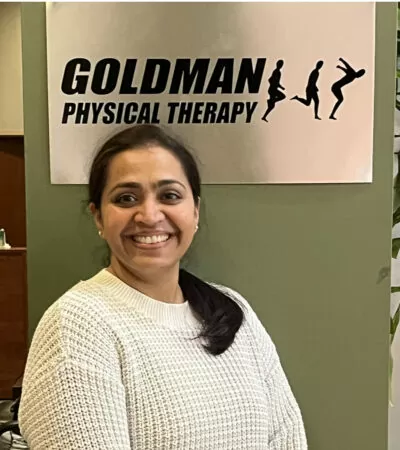
Dr. Aditi Patel, DPT
Doctor of Physical Therapy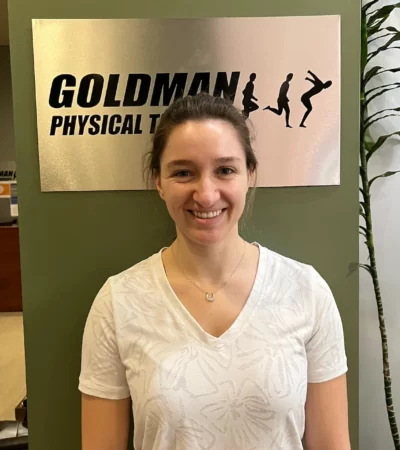
Dr. Haylee Alonso, DPT
Doctor of Physical Therapy